
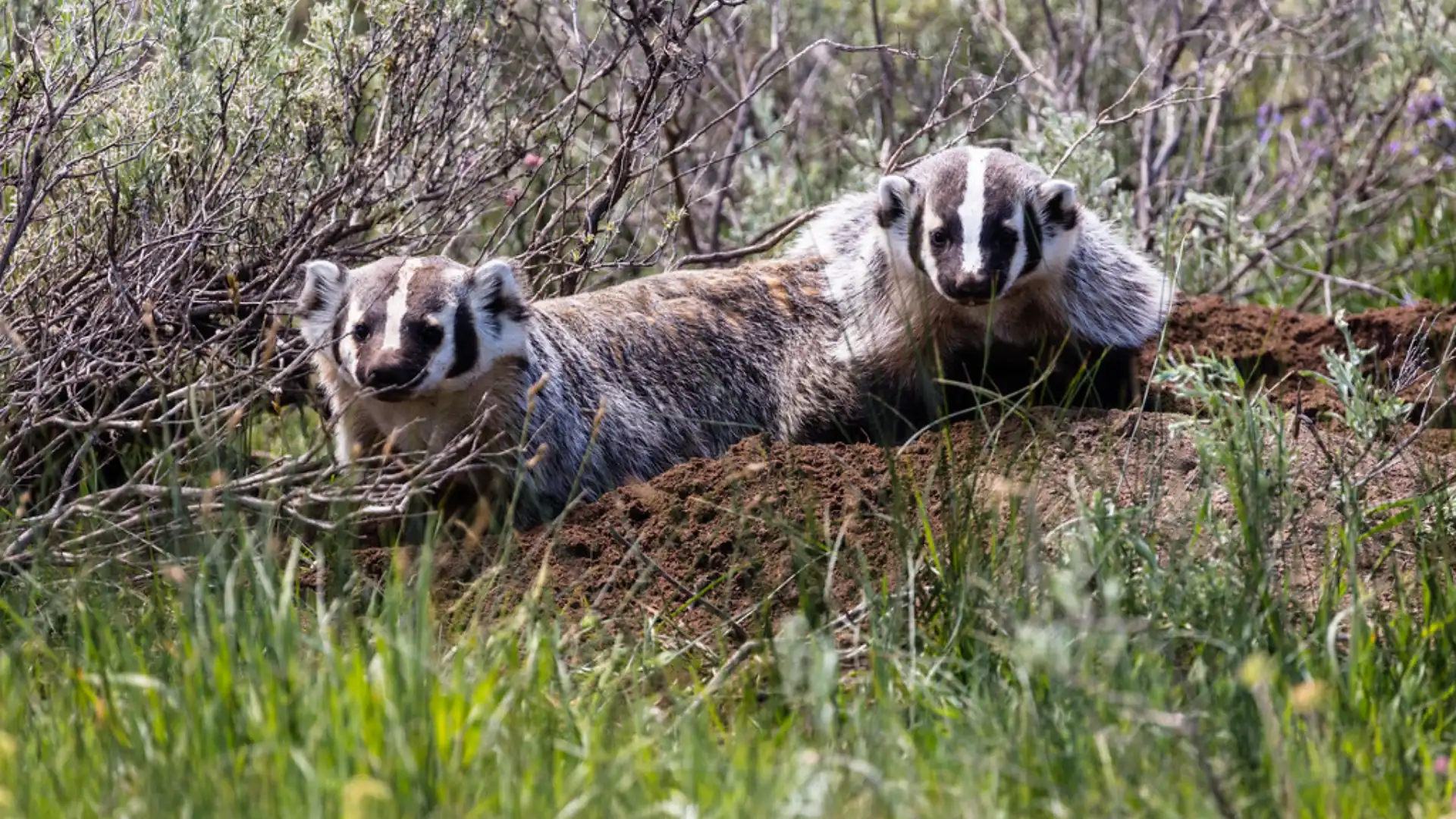
Are There Badgers In Maine? Facts, Habitat, Sightings & Pictures
Are there badgers in Maine? The intriguing nature of these creatures and their relatively rare appearances has led many to wonder about their existence in the Pine Tree State. By examining verified wildlife records and anecdotal reports, this article sheds light on whether these robust mammals truly inhabit Maine.
It highlights various species that often get mistaken for badgers, including fishers and groundhogs, adding clarity to this fascinating topic. Prepare to uncover everything you need to know about badgers in Maine, from their habitats to sightings and images.
Are There Badgers In Maine?
American badgers (Taxidea taxus) are not part of Maine’s established wildlife population. While occasional reports and possible sightings have been documented, these do not confirm a breeding population within the state.

Badgers prefer open habitats with suitable soils, such as prairies and grasslands. Maine’s predominantly forested landscape and varied topography create challenges for these burrowing mammals, making their presence unlikely despite isolated instances of sightings.
Badgers In Maine At A Glance
| Feature | Details |
| Common Name | American Badger |
| Scientific Name | Taxidea taxus |
| Class | Mammalia |
| Family | Mustelidae |
| Typical Diet | Carnivorous/Opportunistic |
| Preferred Habitat | Grasslands, prairies, farmland and open areas |
| Activity Pattern | Mostly nocturnal |
| Main Adaptation | Powerful digging claws |
| Maine Status | Discuss carefully based on confirmed wildlife records |
What Kind Of Badger Is Found In North America?
The American badger, scientifically known as *Taxidea taxus*, is the sole native badger species in North America. These stout animals are easily recognized by their broad, flattened bodies and distinctive facial markings, featuring a white stripe that runs from their snouts to the back of their heads. Typically, they inhabit open grasslands, fields, and even the more arid regions, making their home across a vast geographic range that stretches from southern Canada down to northern Mexico.
American badgers primarily feast on burrowing rodents, including gophers and ground squirrels, displaying remarkable burrowing behavior themselves. They skillfully dig intricate tunnel systems, which not only serve as a means to hunt but also provide shelter. This behavior distinctly sets them apart from their European counterparts, which tend to live in more wooded environments and are more social in nature. Badgers share their family tree with several other sharp-clawed hunters, and this roundup of animals like weasels explores that mustelid connection in more depth.
Why Are Badger Sightings In Maine So Unusual?
Badger sightings in Maine are both intriguing and rare, primarily due to the state’s unique forested landscape. The dense woodlands and rugged terrain present challenges for these typically open-country dwellers, leading to sparse populations in regions that lack suitable habitats.
The geographic range of American badgers typically spans the western United States, with only sporadic populations in the East. This limitation makes Maine an unusual setting for potential badger encounters. Any reported sightings should be approached with caution and carefully verified, as misidentifications can occur easily given the state’s diverse wildlife.
Animals Commonly Mistaken For Badgers In Maine
Photographs, tracks, location, habitat, and body shape can all help identify an animal correctly. A clear photo showing the animal’s full body is especially useful when distinguishing a possible badger from one of Maine’s more common lookalikes.
| Animal | Scientific Name | Why It May Be Confused With A Badger |
| Fisher | Pekania pennanti | Low body and mustelid appearance |
| Groundhog | Marmota monax | Stocky body and burrowing habits |
| Porcupine | Erethizon dorsatum | Rounded, dark body from a distance |
| Raccoon | Procyon lotor | Stocky shape and facial markings |
| Striped Skunk | Mephitis mephitis | Short legs and black-and-white fur |
| North American River Otter | Lontra canadensis | Long, low body and dark fur |
| Wolverine-Like Large Mustelid Sightings | Unverified | Large, dark mustelid-like appearance |
| Domestic Animals Seen From A Distance | Canis lupus familiaris / Felis catus | Unusual shape or coloring from afar |
What Do American Badgers Eat?
American badgers are opportunistic feeders, showcasing a diverse diet that reflects their adaptability to different environments. Here’s a closer look at their primary food sources:
- Rodents: These small mammals make up a significant portion of the American badger’s diet, providing essential nutrients and energy for their active lifestyle.
- Ground squirrels: Agile and common in many habitats, ground squirrels are a favorite snack, easily caught due to their burrowing habits.
- Prairie dogs: As social rodents found in vast colonies, prairie dogs are not just a meal but also a strategic hunting opportunity for badgers.
- Rabbits: These quick and nimble creatures offer American badgers a high-protein meal, particularly in the spring and summer months.
- Small mammals: Badgers are well-adapted for hunting smaller animals, which bolster their omnivorous diet.
- Reptiles: Although not their primary food source, American badgers will occasionally hunt reptiles, adding variety to their nutrition.
- Insects: When other food sources are scarce, these critters become vital, as badgers forage through leaf litter and soil.
- Eggs: A seasonal treat, eggs provide a nutrient-rich food source when found in nests, showcasing the badger’s resourcefulness.
Where Do American Badgers Usually Live?
American badgers thrive in a variety of habitats, such as grasslands, prairies, and open woodlands. These environments provide ample space for them to patrol and hunt for small mammals, insects, and other food sources. The presence of farmland and sagebrush areas also offers favorable conditions, allowing these agile diggers to find suitable burrowing spots.
The importance of loose, diggable soil cannot be overstated in the life of an American badger. Soft soil enables them to excavate their extensive burrows efficiently, creating complex tunnel systems for resting and raising their young.
Physical Characteristics Of The American Badger
The unique physical traits of American Badgers reflect a perfect adaptation to their ecological niche. Their compact bodies are well-suited for digging, and their striking fur provides both insulation and camouflage. The fascinating facial markings serve as a striking feature, distinguishing them within their environment and among other species.
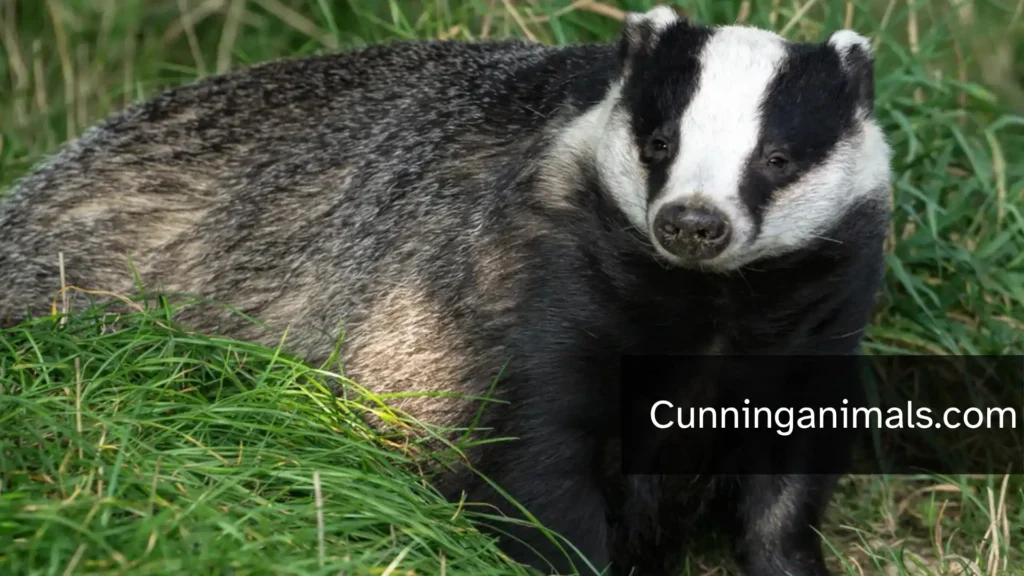
Body Size: The American Badger boasts a stocky build and a relatively low profile, allowing it to navigate through dense terrains with ease. Its robust physique is adapted for both digging and resilience.
Weight: Adult American Badgers typically weigh between 20 to 30 pounds, showcasing a solid frame suited for their burrowing lifestyle.
Fur Color: Their fur exhibits a blend of grayish, brownish hues with striking black-and-white patterns, providing effective camouflage in various habitats.
Facial Markings: A hallmark of the species is the distinctive dark facial stripes that run from the nose to the ears, complemented by a prominent white stripe along the top of the head, enhancing their visual identity.
Powerful Claws: Equipped with long, powerful front claws, American Badgers are exceptional diggers, capable of excavating burrows and searching for prey underground.
Strong Body: Their muscular bodies are not just for show; these robust creatures have the strength to pursue small mammals through intricate underground tunnels, showcasing their hunting prowess.
American Badgers Behavior And Hunting Habits
American badgers exhibit predominantly solitary behavior, which allows them to establish vast territories and minimize competition for resources. This solitary lifestyle isn’t unique to badgers see this feature on solitary animals in the world for other species that thrive alone. These nocturnal or crepuscular hunters come alive at dusk and dawn, leveraging their keen sense of smell to locate underground prey such as rodents, reptiles, and insects..
When a badger detects movement below the surface, it can dig at an astonishing speed, showcasing an adaptation perfected over generations. This relentless pursuit emphasizes their hunting prowess; within seconds, they can tunnel down to a depth where their prey seeks refuge, often catching them unaware.
How Do Badgers Dig Their Burrows?
Badgers are remarkable diggers, employing powerful front claws and muscular shoulders to effortlessly penetrate the ground. Their robust anatomy allows them to excavate extensive burrow systems, which serve as both shelters and nurseries for their young.
These underground homes not only protect badgers from predators but also provide a safe environment for raising their young. While navigating through their sandy domains, badgers often dig in search of prey such as insects and small mammals, highlighting their adaptability in various habitats.
Digging Adaptations:
- Powerful front claws for efficient burrowing
- Strong shoulder muscles for sustained digging
- Preference for loose soil types for easier excavation
- Complex burrow systems for shelter and raising young
- Ability to dig while searching for food, maximizing efficiency
Badger Vs Groundhog
| Feature | American Badger | Groundhog |
| Scientific Name | Taxidea taxus | Marmota monax |
| Family | Mustelidae | Sciuridae |
| Diet | Mainly carnivorous | Mostly herbivorous |
| Body Shape | Low and muscular | Chunky and rounded |
| Main Activity | Often nocturnal | Mostly diurnal |
| Claws | Long and powerful | Adapted for digging |
| Tail | Shorter | Bushier |
| Behavior | Predatory and solitary | Burrowing and generally solitary |
| Habitat | Open landscapes | Fields and woodland edges |
Since groundhogs are one of the most common badger lookalikes, this guide to animals like groundhogs is a useful next read for telling burrowing species apart.”
Are Badgers Dangerous To Humans?
Badgers are largely elusive creatures that prefer to keep their distance from humans. However, these animals can become defensive if they feel cornered, threatened, or injured, particularly when protecting their young from perceived danger. Their powerful claws and sharp teeth serve as formidable tools for self-defense, making it crucial for people to respect their space.
Observing badgers and other wild animals from a safe distance ensures both human safety and animal welfare. By appreciating these fascinating creatures in their natural habitats, we can cultivate a greater understanding of their behaviors and roles in the ecosystem. Encouraging such respectful interactions helps minimize confrontations that can arise when boundaries are crossed.
Are Badgers Protected In Maine?
Badgers, once prevalent in various regions, have seen a decline in Maine, which raises valid concerns about their protection status. Current wildlife laws and species classifications can fluctuate, making it essential to consult Maine wildlife authorities for the latest information regarding badger populations.

While badgers are fascinating creatures, claiming a protected status without verified populations can mislead the public. As conservation efforts continue, informed discussions about badgers and their ecosystems can foster better understanding and support for wildlife management in Maine
Interesting Facts About American Badgers
- Badgers are primarily nocturnal, emerging under the cover of darkness to search for food.
- Though they are often solitary, badgers may share burrow systems with other species, such as foxes. Badgers aren’t the only skilled North American diggers this guide to marmots in North America covers another notable burrowing family worth comparing.”
- Their keen sense of smell allows them to detect prey even beneath the ground.
- Badgers have a unique way of communicating through a variety of vocalizations, including grunts and screams.
- They are incredibly resilient creatures, capable of withstanding harsh weather conditions and droughts.
- A badger can consume up to 1,000 pounds of insects in a single year, showcasing their pest-controlling role.
- Their thick fur and skin serve as armor against scrapes and bites during fights with other animals.
- Badgers have a strong family bond, with mothers fiercely protective of their young.
- Their habitats range from grasslands to forests, reflecting their adaptability to different environments.
- Many folklore tales around the world depict badgers as symbols of tenacity and determination.
Conclusion
The inquiry, “Are there badgers in Maine?” reveals a complex relationship between these animals and their environment. Although confirmed sightings are limited, the possibility of badgers residing in the state offers a glimpse into Maine’s biodiversity.
Their preferred habitats and nocturnal behaviors often keep them hidden from the public eye. By raising awareness and sharing information about their whereabouts, we can help promote conservation efforts for these fascinating mammals.
FAQs
What US State Has The Most Badgers?
There is no definitive nationwide census showing which state has the largest American badger population. However, American badgers are particularly widespread across the Great Plains and western United States. States such as South Dakota, Nebraska, Montana, Wyoming, and North Dakota provide extensive suitable habitat for these burrowing mammals
Are There Any Venomous Creatures In Maine?
Maine currently has no native venomous snakes. The timber rattlesnake once lived in the state but has been extirpated from Maine since the 1800s. However, some other creatures, such as bees and wasps, can deliver venomous stings.
Are US Badgers Aggressive?
American badgers can be aggressive when threatened, cornered, or defending themselves. However, they generally prefer to avoid people and use their powerful claws and teeth primarily for hunting and self-defense.
Does Maine Have Wolverines?
Wolverines are not known to have an established population in Maine today. A historical record exists, but modern verified sightings are extremely rare, and some reported wolverine sightings may involve misidentified animals.
